One of the central ideas in the push for globalization has been for the state to become subservient to the corporates and for citizens to become submissive consumers.
Is it any wonder that our political classes are so loathed after dancing to the tune of corporate lobbyists who push this agenda for decades. Around the world politicians and their economists have peddled the idea that substituting sovereignty for global corporate interests has been a price worth paying but many people aren’t convinced.
With globalization in retreat and the balance of economic power shifting, former IMF economist, Magda Polan and author and founder of Radix think tank, Joe Zammit-Lucia discussed with Renegade Inc. the effects of globalization and the lessons that can be learned from an ideology that puts profit before people and the planet.
The problem when discussing globalization in 2019 is that it can be interpreted in many different ways - politically, economically and culturally. The term globalization invariably means different things to different people. Magda Polan appears to characterize the term as mainly a phenomenon marked by a qualitative shift towards a distinct phase of economic activity indicative of the emergence of neoliberalism from the mid 1970s.
For Polan, what she perceives as an increasingly integrated world has not been without its problems:
“Well, it’s probably the easiest to identify, the economic downsides of it. And that boils down to political choices in many countries. I’d say Europe - which until the 60s/70s relied heavily on industry - wasn’t upstaged by cheaper manufacturers in Asia. Some countries handled that well, they managed to transition their industrial workers into other jobs.”
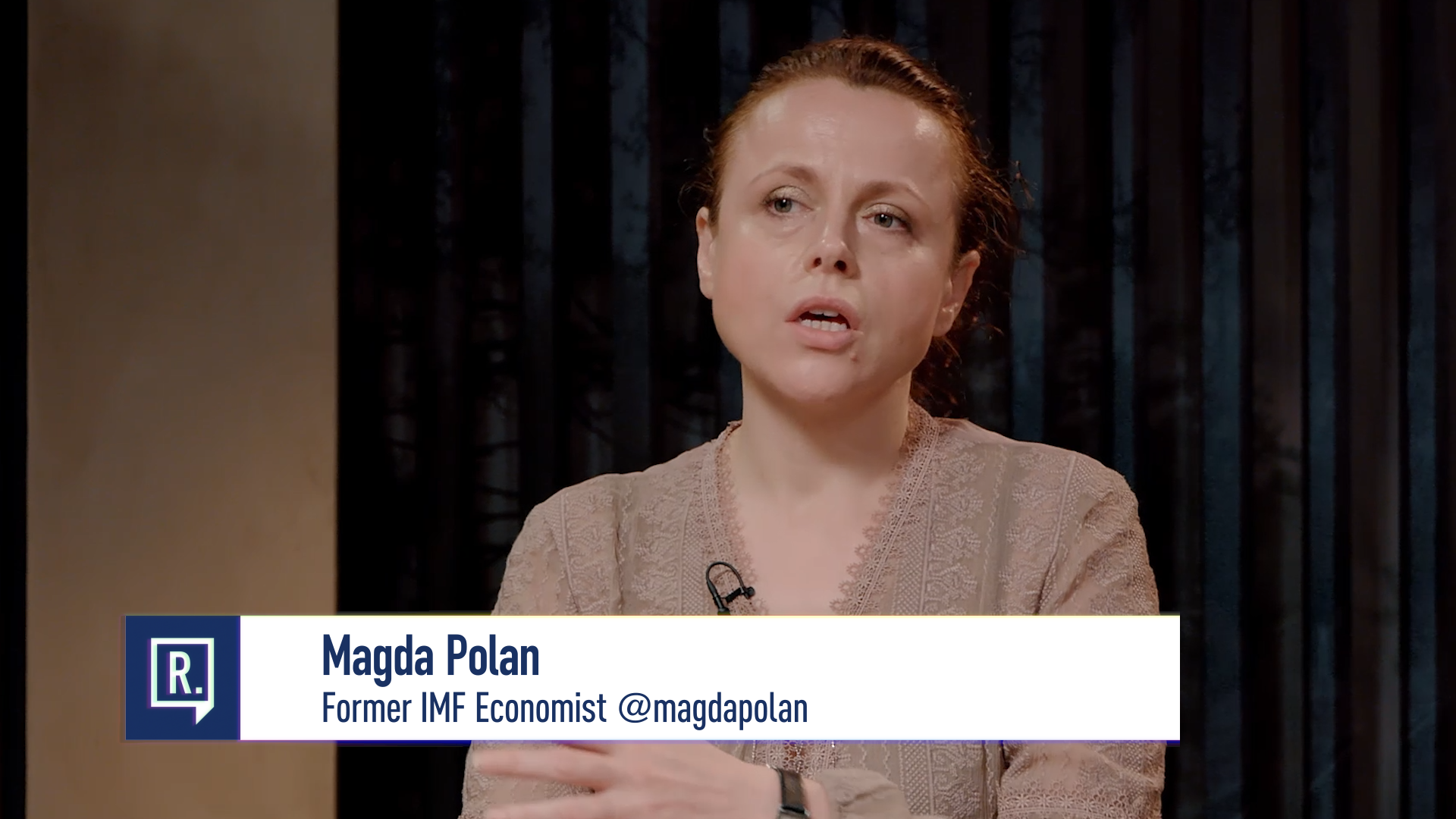
Polan cites the Netherlands and former communist bloc states as nations who handled the transition relatively well whilst the UK, exemplified by deindustrialization, she says, was less successful:
“We still have quite some towns where there is really not much activity happening and there is a hollowing out of cities. Other countries that we can see as both success and small success is post communist countries which suffer from both the deindustrialization shock, globalization shock - on steroids - and the collapse of a political system, say Poland, Czech Republic, Slovakia. They manage to handle it relatively well while in some other countries we had a bit less progress in transitioning from that model of the world to another.”
Polan also highlights the cultural aspect:
“Suddenly you get flooded by goods from other countries and have American television everywhere. Nowadays you have Russian and Chinese TV as well. I saw with myself having grown up in a post communist country that suddenly the culture starts getting affected by the arrival of Barbies and pink and blue distinctions. Also with the goods and marketing comes the cultural aspect of that which starts to change a culture. But I don’t think it is replacing the culture. I think it just simply affects it - makes it more homogeneous. We are more similar. We all watch Game of Thrones, we all watch the same series on Netflix.”
Whilst Polan acknowledges the move toward a universalization of cultural products and lifestyles, she nevertheless accepts the important role human agency plays in terms of its ability to reject mass consumerism.
“I think that comes now to choices; both political and personal choices. So I don’t think people have become slaves to globalization. It is great to have things. It’s good to have a job that allows you to buy them. It’s thanks to the reforms in many emerging market countries that have allowed them to be competitive on the international stage and to attract a lot of foreign direct investment. But it has also mobilized domestic investment so they became rich enough to have domestic savings to then be independent from foreign capitals. Their quality of life has improved dramatically.”
Polan adds:
“The fact that they can afford a Barbie is actually a massive step already from what they were able to afford before. So we can’t forget that international trade is lifting people out of poverty which has decreased globally. We can quarrel about what measure to use but there is generally much fewer proportionately poorer people in the world than there used to be. Quality of life is increasing and infrastructure quality in emerging markets has improved quite a lot. We now see the shift of higher quality manufacturing jobs moving to places like Kenya and Ethiopia… These countries are now becoming the Africa manufacturing hubs. So there is a massive benefit from these changes.”
Zammit-Lucia agrees that at the macro level globalization ultimately improves the quality of life of citizens. However, he emphasizes the need to distinguish globalization (which he perceives as including economic and cultural issues) from globalism (an all encompassing homogeneous ideology) - and international trade.
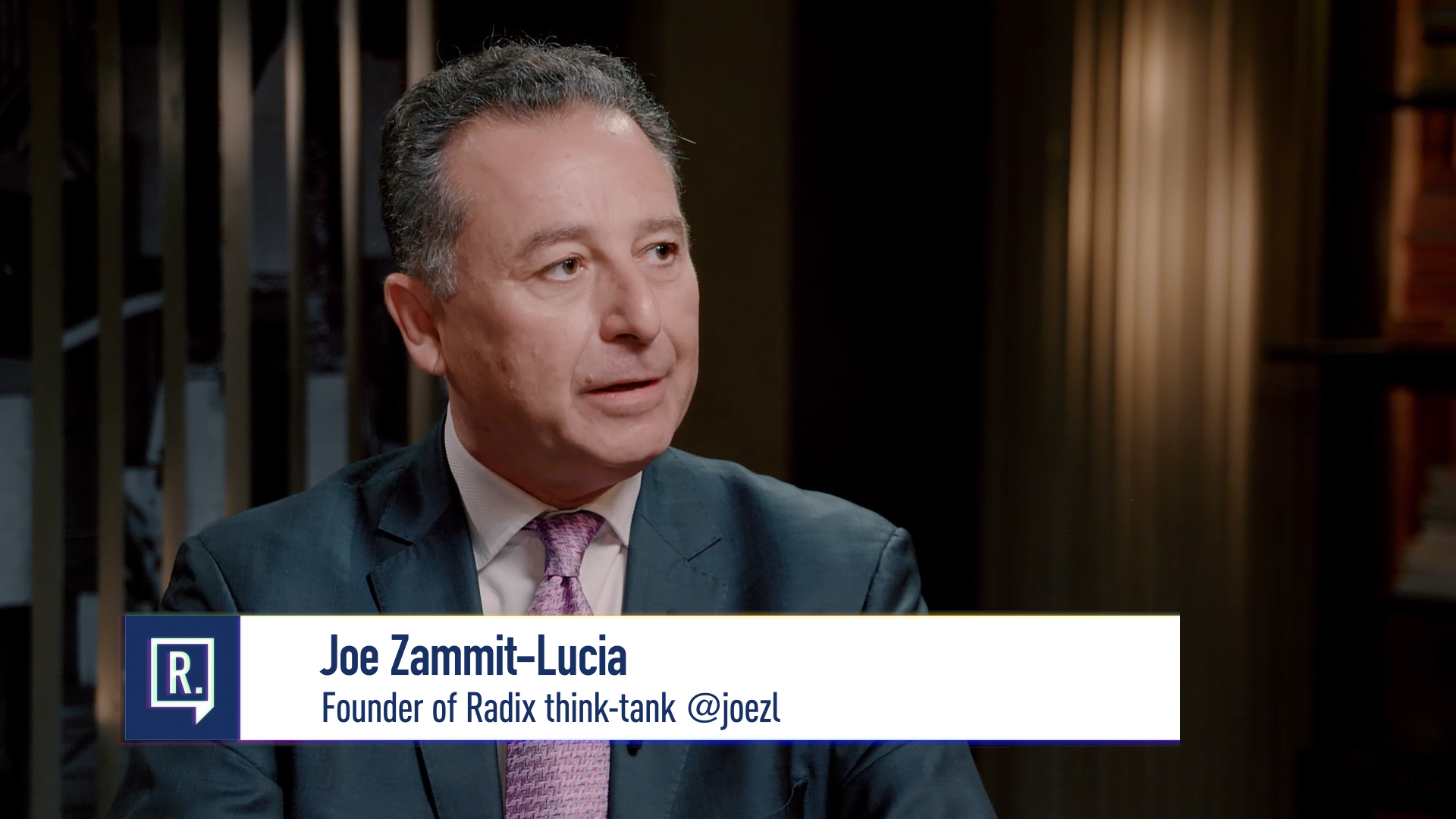
Zammit-Lucia makes the point that whilst the economic, political and cultural connections have improved the quality of life for some people, the benefits have been distributed unevenly. The reality is that alongside the big winners from globalization have been the likes of coal mine workers that deindustrialization has left behind. It’s unrealistic to expect such workers to retrain as programmers for Google. But this isn’t how economists at the macro level view the situation. They regard globalization as a numbers game in which its perceived long term economic benefits are regarded as outweighing the short term political and social costs.
The era of globalization has been characterized in media and political establishment discourse by an almost complete absence of discussing the social factors that Zammit-Lucia claims are now coming back to bite us.
The elevation of the economy at the expense of the society began to emerge during the late 1970s in the UK with the election of Margaret Thatcher indicative of the rise of neoliberalism.
Since neoclassical economics (the ideological pillar of neoliberalism) is taught at most business and economics schools in the UK, it stands to reason that very few economists or business leaders mention the social aspect and the damaging social consequences that arise from an ideological adherence to this neoclassical school.
“I think economists forget that the economy is composed of members of society and it’s really high time we started to make that point much stronger”, says Polan, who adds:
“Because economics is such an intersection of political science, sociology and economical science, [it’s perceived significance] does tend to fluctuate with time.” The economist posits that prevailing neoliberal ideology has shaped political ideology and economic education to such an extent that what is actually a pseudo science has now become widely regarded in mainstream political and media discourse as an actual science.
In the view of Zammit-Lucia:
“Economics is not a science in the sense of the natural sciences but it tries to apply some discipline, structure and rigour to a political ideology. The whole thing starts from, ‘what is your world view’ and depending on that then your economics will be different. But there’s this… one of the issues… getting back to globalization, is that we all used to talk about the political economy, the fact that politics and economics are inseparable, they live together. What globalization has done is that it has fractured that concept of the political economy because politics still remains local, national or subnational - that is where political legitimacy still stands. But economics has become global, so now we have a globalizing economy that is not founded on political legitimacy and this, I think, is a big problem.”
The reason political, and by extension, democratic legitimacy, is being undermined by globalization is because the multinational model once perceived as a paragon of efficiency from the perspective of economists, is being increasingly seen as a way of playing one government off against the other in a race to the bottom. Huge corporations, in other words, have effectively been able to override democratic accountability and political oversight because they have the power to lobby governments to do their economic bidding. It’s a form of economic bribery. “Give me what I want otherwise I’ll take my plant to Vietnam” and that is, if you like, the visible manifestation of the breakdown between politics and finance and economics. And it is one of the adverse effects of the whole globalization movement”, says Zammit-Lucia.
The author of Backlash: Saving Globalization From Itself claims “the whole system that has served us relatively well is now under strain, but that doesn’t mean it hasn’t served us well.” For Zammit-Lucia, the notion of saving globalization from itself is not a question of doubling down on what has gone before, nor is it about being opposed to trade per se, but acknowledging that the dynamics of the world have changed. “We have learnt what has worked well and what doesn’t work quite as well. So how do we evolve to something that is more appropriate for the 21st century? The fact that that system worked years ago doesn’t mean it’s going to work in the future. And the organisations of the people who are responsible for thinking/designing these trading systems or agreements, need to keep up with the times and keep on improving them”, says Zammit-Lucia.
According to the author, no one single entity or individual is in a position to fix the system due to its complexity which he likens to a rain forest:
“Nobody runs or manages a rain forest. It works because it’s a complex adaptive system that finds its way. So I think one of the issues is this belief that somebody can fix the economy. I think we have a society and we try and set rules for how that society operates but things change quite rapidly. I think the pace of change that we’re seeing at the moment is actually very fast. Our institutions have difficulty keeping up with that, and this is perfectly normal. In the past really major episodes of change have happened through collapse. We had the Great Depression, we’ve had world wars, we’ve had revolutions. That’s how change has happened. What we’re trying to do is to avoid that. You know, if you believe that there’s somebody out there who has the answer. Fine. But these people don’t exist, these people have opinions.
But in the view of Magda Polan, Greece is attempting to challenge the system by returning to first principles:
“The country is taking on a challenge of fixing itself. They got the lifeline but they need to address the problem. And they are doing it. I think they realized that they need to go with that because otherwise their economy will not function. I think we need to realize - and I’ve been saying this a few times”, says Polan, “that the voters are responsible for that so that’s why we can’t sit here and say, ‘who’s going to fix the economy?’ we all need to agree that we have those politicians who come in with their snake oil who say, ‘it’s going to be great, it’s going to be fantastic’. We as voters need to realize that we are responsible for these decisions. We can’t only vote for people who promised us cheap, easy, solutions. But also of course we need to remember about the connections between business and politics: who runs, who influences the debate, whether the votes actually get passed on into end decisions.”
It’s the supplanting of democracy by the lobbying power of corporations highlighted by Polan above which is a key feature of Zammit-Lucia’s conceptualization of globalism. However, according to Polan, this should not in any way be used as an argument to diminish the ability of the voting public to ultimately make responsible decisions:
“We do have to take responsible decisions. And of course because on the local level we want the right: what’s good for us, what’s good for families, we want money, we want to have stability of jobs. So that of course works on that local level. For a company and a business executive it works on the local level too: they are expected to maximize shareholder value, they’re are maximized to expect profit, they want to get their money too but politicians as well. He wants to or she wants to be re-elected. I think that’s when the sense of the purpose, longer term goal, all comes into play”, says Polan.
According to Zammit-Lucia, we’ve reached a period of transition (the interregnum) where the old system is dying and we don’t know what the new one’s going to look like:
“Morbid symptoms happen at this time. We don’t know what the new will be… And so the question is, there are lots of people who have been left behind, and they’re angry. We’re all responsible”, says Zammit-Lucia, who adds:
“We have to evolve. We have to be able to recognize that we have done things in the past that may have been appropriated, some of them will have been mistakes (eg. property owning democracy, maximizing shareholder value etc) - there’s no doubt about it.”
In Zammit-Lucia’s view:
“Nobody knows what is going to work in the 21st century because we’ve never experienced the 21st century, we’ve never experienced the digital economy, we’ve never experienced AI, robotics, whatever. We don’t have experience of what’s coming. So for me I think the most important thing is not trying to believe that someone has the answer but to make sure that our conversations are humble, that we don’t know what the answer is and that we get past sticking to having to do it like we’ve done it in the past. So it’s a willingness to change and a humility to understand that we don’t know what the future holds.”
Does Polan agree that it’s more humility that’s needed?:
“Absolutely. Yes”, says the economist. “But also we need open mindedness and critical thinking. These are very important skills for anybody including the voters. So we need to have an open mind that we need to try different solutions and that some of them may not work. We go as we learn. We’ve done it for now a few thousand years as a human civilization. We’ve had those challenges before so that open mindedness, willingness to testings, willingness to question old beliefs. We don’t then need to look for the guilty party necessarily but for solutions and procedures which would help us from this dis-orderly adjustment - revolution, war, famine, massive migrations - to a more orderly one.”
With humility still in Polan’s mind, the economist points to two aspects of globalization where humility hasn’t worked:
“Probably allowing for so much tax optimization procedures for multinational companies and that endless focus on the shareholder value as opposed to what the company really is and its role in the community. The other thing that hasn’t worked is the exploitation of their environment with the unsustainable practices when it comes to both people and the environment. We see the results of that every day and we’re going to see much much more of it.”
Zammit-Lucia points to many factors that have in his opinion, worked:
“Lots of people in developing countries have been lifted out of poverty - millions of people - because of their ability to trade. We’ve seen a lot of cultural exchange; we’ve learned from each other; we’ve transfer technology so people can develop at the aggregate level.”
In conclusion, Zammit-Lucia adds some caveats:
“It’s impossible to get everything right all the time. It’s a question of continuous adjustment - seeing what works, seeing what doesn’t work, trying to make things better but trying to change our mindset around things and avoiding getting into, ‘it’s all his fault’ and ‘it’s all her fault.’ In any system, this has always been the case throughout human history. There are vested interests who benefit immensely from the system as it currently is and those people will always fight to keep the system as is. It is our job not to let them do that.”

With workers pushed to breaking point, is it now time to call time on predatory business models?
Both COVID-19 and the climate crisis are being used as camouflage for central bankers to throw more printed money into a broken system.

With proper access to land denied to the vast majority, is it now time to reclassify trespass as a revolutionary act?