









“The more laws and commands there are, the more thieves and robbers there will be.” Lao Tzu Information leaked in the Panama Papers about the use…


In this bonus sequence from our Meet the Renegades show, writer John Lanchester talks about the London housing crisis, it’s social impacts and it’s consequences…

In this episode of Meet The Renegades we speak to economics writer Martin Sandbu from the Financial Times.
His recently released book ‘Europe’s Orphan: The Future of the Euro and the Politics of Debt’ attacks the current thinking of what politicians and policy makers in Brussels and Frankfurt consider to be self-evident.

There are vast numbers of Zombie companies out there who are paying off nominal interest payments on huge debts in order to keep the lights…
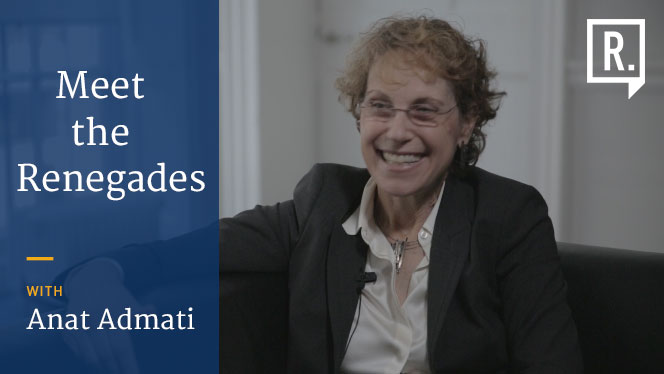
Ross Ashcroft speaks to Anat Admati, Finance and Economics professor at Stanford School of Business. She is author of The Bankers’ New Clothes and gives a truthful view into the banking sector and the damage it has caused to the real economy.

In this Renegade Inc. talk show at Camp Kotok in Maine, Ross Ashcroft speaks to Matt Tyrmand from the NGO American Transparency which focuses on government accountability….
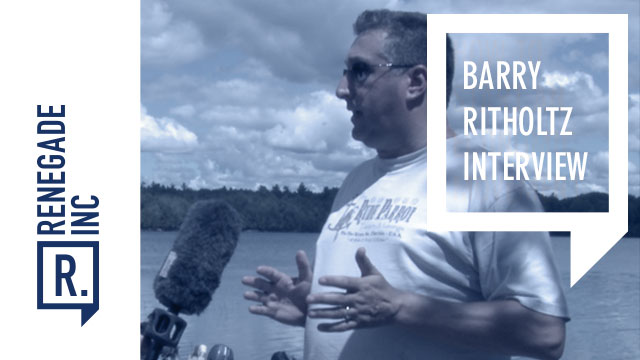
At Camp Kotok in Maine, USA, Ross Ashcroft speaks to author, columnist, equities analyst and CIO of Ritholtz Wealth Management, Barry Ritholtz. They discuss the…
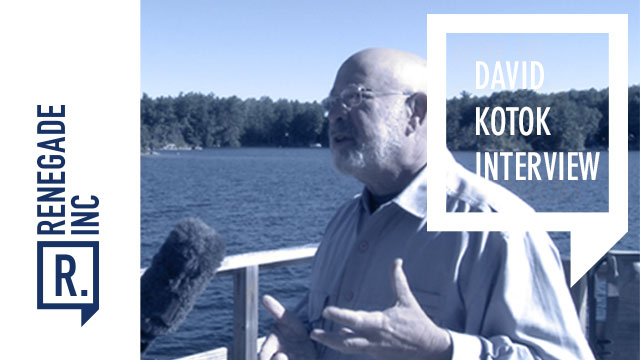
Ross Ashcroft speaks to David Kotok, founder of Camp Kotok, in Maine, and Chairman and Chief Investment Officer of Cumberland Advisors. They discuss the origins and…

In this extract from the documentary Four Horsemen, some of the world’s leading economists discuss the myth of trickle down economics.

Making a job, not taking a job means so much more than simply turning your back on employment and setting up on your own. It is more a way of life, a new distinctive multiple income stream lifestyle. It requires a new way of thinking, and not relying on big business or government to put our best interests first.

By now you may have noticed a common theme in these descriptions of how the banking sector and the financial markets make money: they do…
Fractional reserve banking began in Britain in the early days of gold and silver coinage, when people would deposit their coins with goldsmiths for safekeeping….

Looking at the terms of the Greek bailout one thing is abundantly clear: this is not only a heartless deal, but a brainless one as…

Can Greece ever pay off its debts, adopt a German economic mindset and stay in the euro? Since 2010 we have been gripped by the…

Most people equate money with wealth, but in economic terms money and wealth are quite separate things. Wealth can be defined as those goods and…

Our life prospects and our capacity to secure the wealth we need to survive and flourish are determined by the amount of economic power we…

In this extract from the documentary Four Horsemen, Professor Michael Hudson explains how the German Debt was cancelled in 1947.

Changes to the monetary and taxation systems will provide mechanisms for curtailing two of the three forms of unearned wealth that drive much of the…

Since the crash, taxpayers’ money has been used to bail out failing banks because they are perceived to be too big to fail. Are they…

Generally, loans are made (and money is created) for one of three purposes: to fund direct investment in the creation of new tangible wealth; to…

Although the current crisis is possibly the most serious and complex in human history, it follows a pattern that has existed since ancient times. The…
Kim Hill from Radio New Zealand discusses Greece, austerity and Europe’s future with Ross Ashcroft on her Saturday Morning show.

Harold Crooks, Director of “The Price We Pay” and John Christensen, Director and Co-founder of Tax Justice Network discuss the Robin Hood tax, the capture of the political class by the financial industry and the hope that lies in civil society’s intensifying fight for tax justice in the second half of this interview series.

Everyone has a basic right to shelter, which they should be able to call home. A home should not be an investment but a place…
Four Horsemen

Prof. Stiglitz on who should really take the blame for the financial crisis.

In 1970, ninety per cent of financial flows were used to finance trade or investment in the real economy; only ten per cent was speculative….

The use of precious metals as money goes back nearly three thousand years. Until quite recently, gold and other metals (notably silver) were the basis…

How is it that we’ve ended up with a system in which banks have the power to create money? In this extract from Four Horsemen we explain what Fiat money is.

New
Steve Keen Interview - Part 2: Elaborating on the problems with austerity, Steve Keen explains how private debt really works.

The wider public is depressingly disinterested in the workings of the economy; nowhere is this more evident than in their ignorance of the monetary system….

As a way of securing wealth without engaging in real economic activity – the act of combining land, labour and capital to create something with…
Four Horsemen
Featured
What is the fall-out from a financial industry now so detached from the rest of society?
Renegade Economist

Featured
Ross Ashcroft from Renegade Economist speaks with Steve Keen whilst he was in London to launch his new book ‘ Debunking Economics: The Emperor Dethroned?’
Renegade Thinking
Ross Ashcroft interviews Julia Noakes, author of the soon to be released book ‘Bankers on the Couch’.
Four Horsemen

Tarek El Diwany explains the beginning of manufactured money.
Four Horsemen

Featured
We’ve been ripped off by the current system, so how do we start a revolution?
Four Horsemen

Former IMF chief economist Simon Johnson discusses the leverage of Wall Street banks in Washington D.C.
Four Horsemen
Featured
A former Wall Street trader discusses the risks of interest rates.
Four Horsemen

Michael Hudson predicts the new financial balance by analysing the current situation of countries that are ahead of us in the curve.

These arguments appear irreconcilable. So who is right? And how could there have been any doubt? The reason the argument rages so often is that…
We now live in a nation where doctors destroy health, lawyers destroy justice, universities destroy knowledge, governments destroy freedom, the press destroys information, religion destroys morals, and our banks destroy the economy.
Chris Hedges

Featured
We met Ben Dyson and Andrew Jackson from Positive Money. Listen to their proposals to reform the monetary system.
Renegade Economist

This is the future of banking. Like during the 16th Reformation you either evolve or die. Watch why…

It’s what’s left unsaid All the talk from politicians, economists and even most journalists is of government debt to GDP ratios. All of the problems…
Renegade Thinking
Ross Ashcroft speaks with Richard Vague - former banker and author of The Next Economic Disaster. They talk about his insights into private debt and…
Four Horsemen

Is the Fed just an extension of European Central Banks?
Wall Street has become a very specific type of casino. Unfortunately it's not the type they have in Las Vegas that is a legitimate form of entertainment. It's a casino that has massive negative effects on the rest of society.
Simon Johnson
Four Horsemen

A former trader speaks about life inside the system.
Four Horsemen
Featured
Former IMF chief economist Simon Johnson discusses how the financial part of our society should be more constrained.
Four Horsemen
Colonel Wilkerson asks a fundamental leadership question.
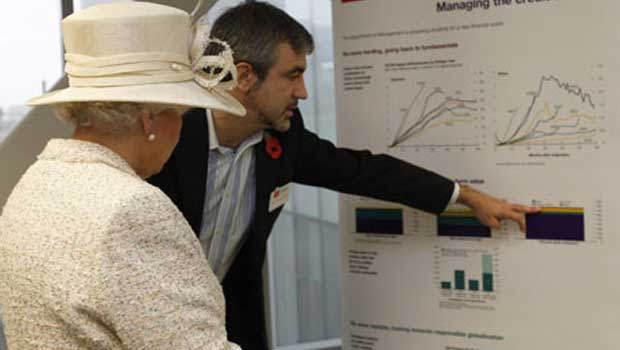
This simple question reflected a widely held view that economics as a subject had something to answer for. For a proportion of economists (and their…
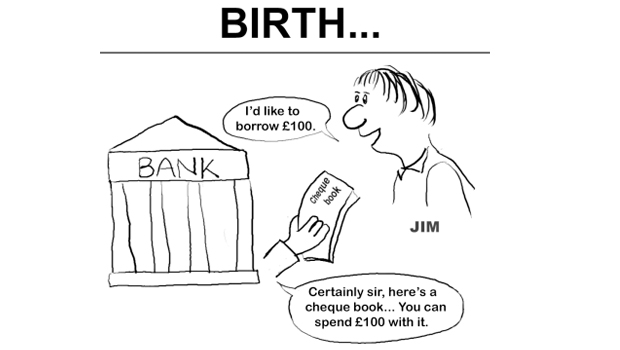
They assume that money is essentially tokens that get passed from person to person as they exchange goods. One would assume that the amount of…